

Why the future of pharmaceutical CDMOs will be shaped not just by technology, but by the integrity of their systems.
1. The New Standard of Trust in Global Pharma
As pharmaceutical supply chains stretch across borders and regulatory oversight sharpens, trust has become a strategic asset. The CDMOs setting the pace today are defined less by the sophistication of their technology and more by the maturity of their quality systems, digital discipline, and organisational culture.
Globally regulatory inspections, one theme has emerged: regulators increasingly reward companies that demonstrate habitual compliance, not orchestrated compliance. Facilities that operate as though an audit could happen any day are the ones partners rely on.
This is where InstaPill® has built an uncommon reputation.
“We don’t prepare for audits. We are audit-ready every single day.” Sreekumar G., Quality Assurance Leader, InstaPill®
For CDMOs, “audit readiness” is often treated as a sprint before an inspection. The best CDMOs are audit ready every day. They don’t merely pass inspections, they build muscle, a disciplined, repeatable way of working where compliance is a byproduct of culture, systems, and relentless daily routines.
In a sector historically built on paperwork, reactive documentation, and last-minute readiness drills, InstaPill’s approach is one rooted in transparency, digitisation, and a culture that treats quality as a lived behaviour, not a regulatory checkbox.
2. Audit-Readiness Is Not an Event; It’s Daily Discipline.
Audit readiness is not defined by documentation alone; it reflects organizational quality culture behavior. While inspections occur at discrete intervals, operational discipline must remain constant. Within CDMO environments where product portfolios, client expectations, and technology transfers evolve continuously only consistent daily standard work can prevent operational drift, including data drift, procedural drift, and cultural drift.
Daily discipline means:
- • Every batch, every record, every activity is handled in compliance with procedure and regulatory requirements
- • Gemba based verification: leaders see reality first hand.
- • Embedded data integrity controls (ALCOA+), not after the fact reconciliations.
- • Visual management and tiered huddles that surface risks early.
- • Closure rigor for deviations/CAPAs that prevents recurrence rather than ticking boxes.
Bottom line: Inspections tell you what happened; discipline determines what will happen next.
This differentiator becomes even more important as global regulators emphasise data integrity.
~60–65% of US FDA warning letters cite data integrity deficiencies as a primary or contributing factor. Incomplete batch records, backdated entries, and missing audit trails remain the most common GMP findings in oral solid dosage facilities.
InstaPill’s philosophy directly addresses this system-level vulnerability.
“If an activity is done now, it must be documented contemporaneously. There is no backlog, no reconstruction. That’s what keeps us confident,” says Sreekumar G.
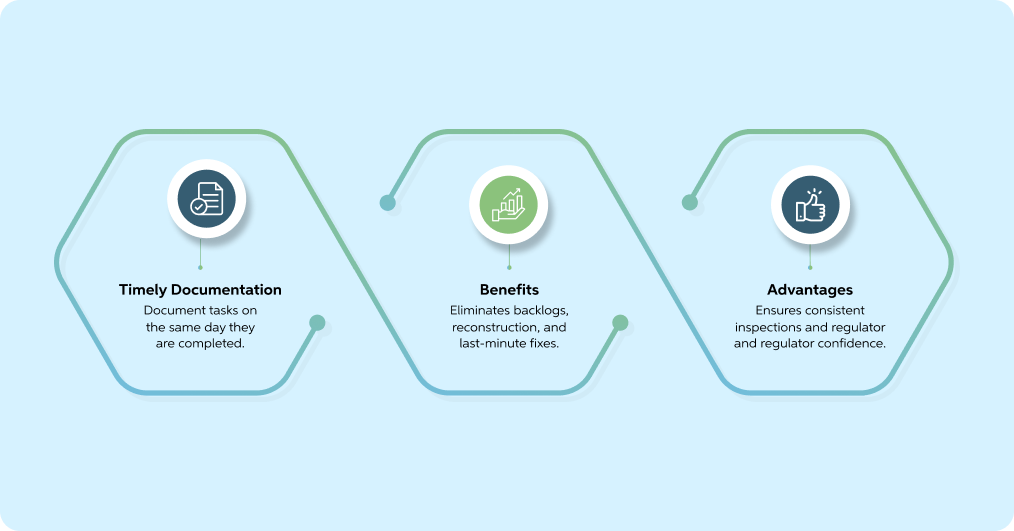
Instead of treating QA as a policing function, InstaPill embeds quality ownership into every role, including manufacturing, engineering, R&D, and supply chain. Every decision maker is expected to act with the understanding that:
- • Patients trust the product,
- • Partners trust the system, and
- • The QA team signs on behalf of both.
It also reframes an outdated industry notion that quality must be adversarial.
“We are not here to stop the process. We are here to find solutions that protect both patient and business,” he continues.
3. Digitisation as the Backbone of Modern Quality Systems
InstaPill’ s digital platforms for material management, Quality Management System (QMS), electronic logs, electronic batch records, Facility Management, Document Management and training management create a robust framework for documentation control and real-time quality oversight. Embedded data integrity practices, aligned with ALCOA+ principles, minimize manual transcription errors, version discrepancies, and undocumented interventions.
If culture is the mindset behind InstaPill’s audit-readiness, digitisation is the infrastructure that sustains it.
While many facilities still operate on hybrid systems with paper-based batch records, InstaPill’s facility is among the few fully digital ODT sites globally, with e-BMRs, e-BPRs, and electronic logbooks, with zero paper documentation on the shop floor.
Digitisation also addresses one of the most persistent challenges in regulated manufacturing: data integrity failures stemming from manual recording.
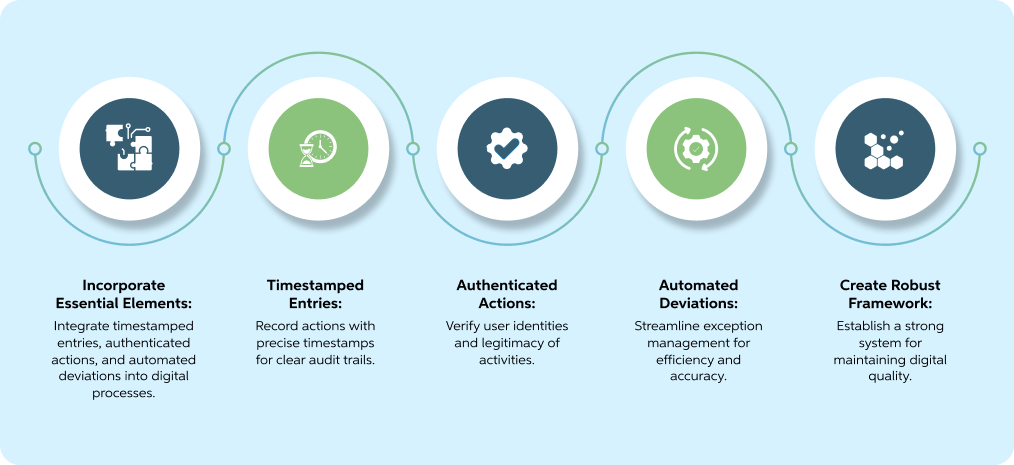
At InstaPill:
- • Every action is time-stamped.
- • Every entry is authenticated.
- • Every deviation triggers an automated workflow.
- • Every batch has a unified, review-ready digital trail.
“If I am doing a task now, it must be recorded now. Digital enforcement makes this non-negotiable,” says Sreekumar G.
Beyond compliance, digitisation accelerates decision-making. QA reviewers no longer sift through fragmented paper trails; instead, deviations, CAPAs, and investigations flow through a connected digital QMS that enforces accountability at every stage.
This infrastructure enables:
- • real-time audit readiness
- • faster partner reporting
- • cleaner regulatory submissions
- • error-proof change control
- • uniformity across global batches and SKUs
4. Transparency as a Quality Multiplier: How InstaPill Treats Deviations
In mature quality systems, deviations are signals. They reveal where processes stretch, where assumptions need refining, and where systems can evolve. At InstaPill, this understanding shapes how deviations are recorded, investigated, and resolved.
Deviation reporting is encouraged, not suppressed. Every event is documented in real time, assessed within defined timelines, and evaluated for both immediate impact and systemic learning. The objective is improvement that endures.
This approach aligns closely with regulatory expectations. Global regulators increasingly emphasise quality culture over procedural compliance.
According to the ICH Q10 Pharmaceutical Quality System guideline, organisations that demonstrate consistent deviation reporting and effective CAPA execution show stronger lifecycle control and lower long-term compliance risk.
Industry data reinforces this. A review of EMA inspection outcomes between 2021 and 2023 showed that facilities with transparent deviation histories and robust CAPA documentation received fewer repeat observations and faster inspection closures.
At InstaPill, deviation investigations are conducted through a collaborative, cross-functional approach rather than in isolation. Teams comprising representatives from Manufacturing, Engineering, Quality, and, when applicable, external partners jointly evaluate the issue to identify root causes from multiple perspectives. Investigations are reviewed at various levels, including site quality forums and corporate quality oversight, to ensure they are thorough, objective, and result oriented.
This structured approach supports the identification of true root causes and facilitates the implementation of effective CAPAs within defined timelines and with clear accountability, thereby minimizing the recurrence of deviations or failures.
This multi-layer review structure serves two purposes:
- • it improves the technical quality of investigations, and
- • it reinforces a culture of shared accountability.
Transparency, in this context, becomes a multiplier. It strengthens systems, builds confidence with regulators, and creates predictability for partners operating across global markets.
5. The Human Side of Quality: Persuasion, Ownership, and Responsibility
Quality systems do not operate in isolation. People enact them through decisions, conversations, and judgment calls made under real-world constraints. At InstaPill, this human dimension is recognised as central to QA effectiveness.
Quality assurance functions as a connective tissue across teams. It aligns scientific rigor with operational reality and business objectives. This requires persuasion, clarity, and credibility, particularly in cross-functional settings where priorities differ.
The QA team’s responsibility extends beyond compliance. Every batch released carries an implicit commitment to the patient. This perspective shapes how decisions are made internally and how risks are communicated externally.
“When we certify a batch, we certify it on behalf of the patient. That sense of responsibility drives every decision.”
This ethos aligns with broader industry thinking.
Research shows that organisations with strong quality cultures emphasise problem-solving skills, ethical judgement, and cross-functional collaboration as core QA competencies, often more predictive of compliance performance than procedural knowledge alone.
Over time, this approach builds trust internally. Teams see QA as a partner invested in outcomes, not an obstacle to progress. That trust becomes visible in smoother operations, faster resolution cycles, and consistent regulatory confidence.
6. Partner Trust in Practice: Collaboration, Change Control, and Commitment
For CDMO partners, quality culture becomes most visible during change. Adjustments to flavour, excipients, or sensory profiles introduce complexity that tests governance systems and communication pathways.
“We have taken more than 50 trials for a single product to reach a result the customer was satisfied with. We don’t give up, and we don’t ask our partners to give up,”— Sreekumar G.
At InstaPill, change control is treated as a shared responsibility with partners. Requests are assessed through formal quality frameworks, with clear documentation, risk evaluation, and traceable decision-making. Where patient acceptability or market requirements demand refinement, iteration is embraced.
True audit readiness is not demonstrated under scrutiny, but sustained in daily practice. That consistency is what ultimately defines credibility with regulators, partners, and patients alike.
What Audit Ready CDMOs Do Differently: Culture, Systems, and Trust
Audit ready CDMOs outperform on three flywheels:
A. Culture: “How We Do Things Here”
- • Psychological safety + accountability: Teams raise issues early without fear paired with clear ownership and consequence management.
- • Leaders model standards: HODs and SMEs perform routine floor walks, review primary records, and respect stop work authority.
- • Learning velocity: Deviations → insights → standardized work → retraining within days, not quarters.
Cultural tests
- • Do operators stop the line to fix a data gap?
- • Does QA help solve, not just police?
- • Are batch record errors trending down month over month?
B. Systems: Engineered for “Right First Time”
- • Procedures that match the work: SOPs written with operators, tested in the actual context, with human factors cues and pictures where helpful.
- • Digital by default: Electronic QMS and Document execution systems such as eBMR, eBPR, DMS, elogs orchestrate controls, enforce sequencing, and preserve metadata.
- • Traceability by design: Every action time-stamped, attributable, and reviewable (ALCOA+).
- • Closed loop quality: Deviations → root cause (5 Why/Fishbone/Ishikawa) → CAPA → effectiveness checks → process change.
C. Trust: The Multiplying Effect
- • With regulators: Transparent, unambiguous data and narratives build credibility.
- • With sponsors: Predictable cycle times, fewer surprises, and clear communication.
- • Within teams: Shared reality around issues accelerates problem solving.
Key Takeaways
- • Audit-readiness is a daily behaviour, not an inspection event: Systems built for real-time documentation outperform last-minute compliance preparation.
- • Quality ownership extends beyond QA teams: Manufacturing, engineering, R&D, and supply chain share responsibility for compliance outcomes.
- • Digitisation strengthens data integrity and accountability:Electronic batch records and automated workflows eliminate reconstruction risk and audit gaps.
- • Transparent deviation handling builds regulatory confidence: Open reporting and robust CAPA execution reduce repeat observations and inspection friction.
- • Quality culture directly impacts partner trust: Predictable systems and disciplined change control enable long-term CDMO collaborations

References:
- European Pharmaceutical Review. (2024, March 13). FDA warning letters highlight data integrity issues.
- FDA. (2022). Culture of quality: Data integrity and cGMP compliance.
- IDBS. (2024). Why is electronic batch recording important in pharma.
- Warning Letters. (n.d.). U.S. Food & Drug Administration (FDA).
- ICH Q10 Pharmaceutical Quality System (PDF)
- European Medicines Agency. (2024). Inspections and compliance. In Annual Report 2023.
- Ramnarine, E. (2021). Solving the Continual Improvement and Innovation Challenge for the Benefit of Patients: How an Effective Pharmaceutical Quality System (PQS) and Risk-Based Approach Could Transform Post-Approval Change (PAC) Management. Technological University Dublin. DOI: 10.21427/ 960F-8S69